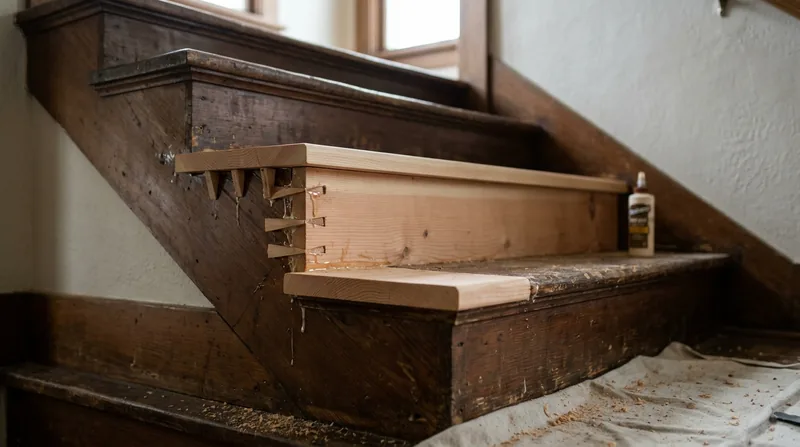




Spokane's grand staircases tell the story of the city. From the sweeping flights in Browne's Addition Queen Annes to the solid oak treads in South Hill Craftsman bungalows, to the simpler ranch-style stairs in Spokane Valley, every staircase eventually shows wear. Squeaky treads, loose banisters, wobbly newel posts, and worn stair stringers are common across Spokane's mix of 1890s mansions, early 1900s Craftsman homes, mid-century splits, and newer two-story builds in Liberty Lake and Moran Prairie. Stair and railing repair in Spokane keeps these passages safe and solid, whether you're restoring a period-correct baluster in a heritage home or tightening a modern handrail on a 1960s ranch. We repair squeaky treads, reset loose banisters, reinforce stringers, and install handrails that are comfortable to grip and built to last. Learn more about our residential carpentry services across the region.
Why Stair and Railing Repair Matters in Spokane's Older Neighborhoods
Spokane's building stock spans 130 years. The oldest homes, built in the 1890s and early 1900s, have treads and stringers made from old-growth Douglas fir or redwood that have settled, shifted, and dried over decades. The freeze-thaw cycles of Spokane winters, snowmelt in spring, and seasonal humidity swings work on wood joints and fasteners. Newer homes in Spokane Valley and Liberty Lake have their own issues: loose fasteners from normal house settling, worn treads from traffic, or railings that never were tightened properly at handoff. A staircase that creaks or has a loose railing is not just annoying. It signals that structural connections are failing, and that's a safety issue and a repair bill waiting to grow.
- Squeaky treads happen when fasteners between tread, riser, and stringer loosen over time due to wood movement and foot traffic.
- Loose banisters and balusters occur when mortise-and-tenon joints or lag bolts work free as wood shrinks or fasteners corrode.
- Worn or damaged stringers (the angled support beams on each side of the staircase) can sag or crack if the wood ages or if fasteners fail.
- Handrails that shift or feel unstable create a fall hazard and often need to be reset or reinforced with additional blocking.
- Loose newel posts at the top and bottom of the flight are common in older homes and a sign that the balustrade system needs re-fastening.
Addressing these issues early prevents larger structural problems and keeps your staircase safe for family and guests.
Key info: Spokane's 1900s-1930s Craftsman bungalows often have original stair railings with period-correct balusters and newel posts. We restore these elements to their original character while ensuring they meet modern safety standards for handrail grip and baluster spacing.
How We Repair Stairs and Railings in Spokane Homes
Our process starts with a close look at what's moving, creaking, or loose. We test each connection, check for wood rot or damage (especially in older homes where moisture from snowmelt can have worked into stringers or sill plates), and determine whether the issue is a fastener problem, a wood problem, or both. For squeaky treads, we often drive screws from underneath the stringer or through the riser into the tread to lock the connection. For loose railings, we re-tighten or replace fasteners, check that mortise joints are still sound, and add blocking or reinforcement where needed. For worn stringers or treads, we assess whether the wood can be repaired or whether replacement is the honest answer. We restore period railings in older Spokane homes, matching wood species and baluster profiles where possible. See our work on finish carpentry and trim for more detail on restoration techniques.
- We inspect the entire staircase system, including stringers, treads, risers, banisters, balusters, and newel posts, to identify all loose or damaged connections.
- We tighten or replace fasteners (screws, bolts, or lag bolts) that have worked loose due to wood movement or age.
- We repair squeaky treads by securing the connection between tread and stringer from below, often without disturbing the visible surface.
- We reset or reinforce handrails to ensure they are solid and meet building code grip requirements for safety.
- We repair or replace worn stair stringers, treads, or risers if the wood is damaged, cracked, or rotted.
- We restore period balusters, newel posts, and railings in older homes, matching wood species, finish, and design to the original work.
The goal is a staircase that is safe, solid, and true to the character of your home.
Example: A Cannon Hill homeowner noticed squeaking on the third and fourth treads of their 1920s staircase. We drove structural screws from underneath the stringers to re-secure the treads without touching the finished surface. The squeak stopped, and the original varnish remained untouched. The repair took one afternoon and cost far less than replacing the entire flight.
| Repair Approach | Description | Best For |
|---|---|---|
| Fastener re-tightening | Tightening or replacing loose bolts, lag bolts, and screws at joints and connections. | Loose railings, balusters, and newel posts that are structurally sound but have worked free over time. |
| Squeak elimination | Driving screws from underneath stringers or through risers to lock treads in place without visible fasteners. | Squeaky treads on older staircases where the wood structure is sound but connections have loosened. |
| Wood repair and blocking | Adding blocking, sistering stringers, or filling small cracks and damage to restore structural integrity. | Worn, cracked, or partially damaged stringers and treads that do not require full replacement. |
| Tread or riser replacement | Removing and replacing individual treads or risers that are rotted, split, or worn beyond repair. | Wood rot, deep cracks, or heavy wear on specific treads while the rest of the staircase remains sound. |
| Handrail installation and reinforcement | Installing new handrails or reinforcing existing ones with additional blocking and fasteners to meet code and comfort standards. | Missing, loose, or unsafe handrails, or when upgrading older railings to meet current safety requirements. |
| Period restoration | Restoring original balusters, newel posts, casing, and handrails to match the design and wood species of the home. | Heritage and older Spokane homes where the staircase is a design feature and original character must be preserved. |
Stair and Railing Repair Cost in Spokane: What to Expect
The cost of stair and railing repair in Spokane depends on what's wrong and how much work is needed. A simple tightening of loose fasteners or a squeak fix on one or two treads typically runs from $600 to $1,200. More involved work, such as reinforcing a worn stringer, replacing a damaged tread, or restoring period balusters, ranges from $1,200 to $3,500 or more. A full staircase replacement (stringers, treads, risers, and railings) is a major project that we price on a case-by-case basis after an on-site look. Travel is included in our Spokane service area, which covers Spokane, Spokane Valley, Liberty Lake, Cheney, Airway Heights, and surrounding communities. Get a realistic estimate by calling us at (509) 351-9472 for a free, no-obligation assessment. See our full pricing overview for more detail.
Factors that affect the final cost include the extent of damage or wear, the type of wood and finish involved, whether the staircase is a period home requiring restoration or a modern build, and whether any hidden damage (such as rot in the stringers) is discovered during the work. Older homes with original hardwood stairs and railings sometimes cost more to repair because we take care to preserve the finish and match wood species and details. Modern stairs with clear or stained finishes are often simpler and faster to repair. Getting two or three estimates from local contractors gives you a clear picture of the market and helps you make an informed choice.
What to Look for When Hiring a Carpentry Contractor Near Me in Spokane
Choosing the right carpenter for stair and railing work matters. You want someone who understands the wood, knows how to work on both old and new homes, and takes pride in the finish. Start by asking for references from recent stair or railing jobs in Spokane, Spokane Valley, or Liberty Lake. Call at least two or three and ask about the quality of the work, whether the repair held up, and whether the contractor showed up on time and communicated clearly. Check that the contractor is fully insured and ask about their experience with period homes if you live in a heritage property like those in Browne's Addition or the South Hill. Get a detailed written estimate that spells out what will be done, what materials will be used, and when the work will be finished. Ask about permits. Staircase alterations sometimes require a building permit depending on the scope of work and local code, so it's worth asking your contractor to clarify whether a permit is needed for your job. If you live in an HOA community in Moran Prairie or another managed neighborhood, check your CC&Rs to see whether exterior railings or visible changes need HOA approval before work begins. Call us at (509) 351-9472 or visit our contact page to request a free estimate and speak with a carpenter who knows Spokane homes inside and out.
Stair & Railing Repair in Spokane: Pricing Guide
| Service | Price | Details |
|---|---|---|
| Loose fasteners and minor tightening | Starting at $600 | Tightening bolts, lag bolts, and screws at railings, balusters, and newel posts; includes inspection and minor adjustments. |
| Squeak repair on one to three treads | Starting at $800 | Driving screws from underneath stringers to lock treads; cost increases with number of treads and stringer access difficulty. |
| Tread or riser replacement, worn stringer repair, handrail installation | Starting at $1,200 | Individual tread or riser replacement, stringer reinforcement or sistering, handrail installation and blocking; cost depends on wood species and finish. |
| Period restoration or complex multi-element repair | On estimate | Restoring original balusters and newel posts, full staircase troubleshooting, or multiple systems requiring custom work; requires on-site assessment. |
| Travel | Included | No separate mileage or travel fee within Spokane, Spokane Valley, Liberty Lake, Cheney, Airway Heights, and surrounding service areas. |
| Free estimate | Free | No-obligation assessment and written quote within 24 hours; call (509) 351-9472 to schedule your inspection. |
Indicative pricing, the exact cost depends on square footage, finish, and site access. Free personalized estimate within 24h at (509) 351-9472.


