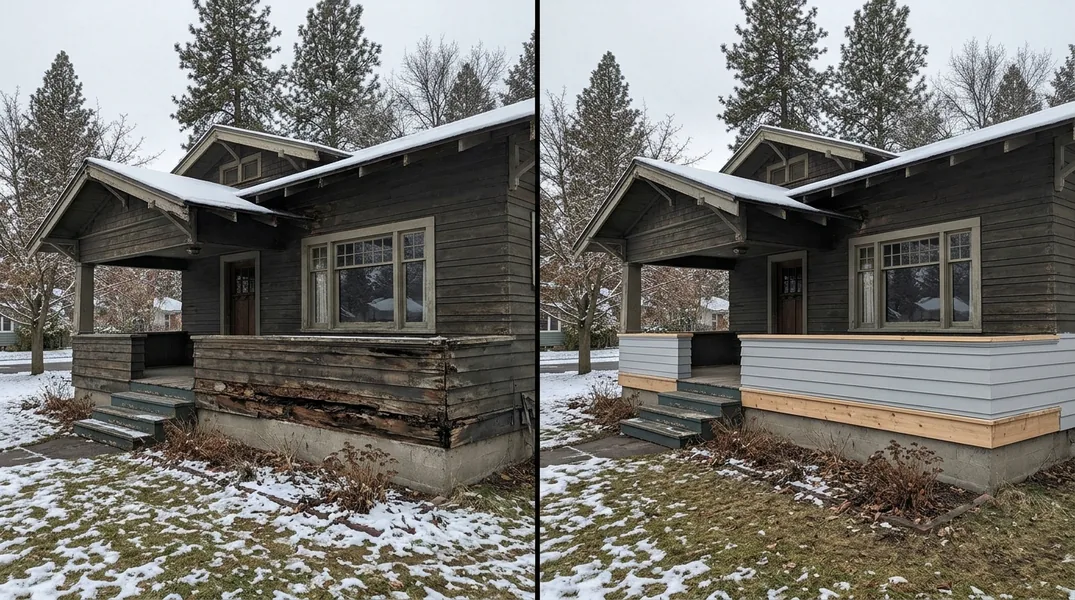
Why Spokane's Climate Creates the Perfect Conditions for Ice Dams
Spokane experiences one of the most challenging seasonal patterns in the Pacific Northwest when it comes to home damage. The region's freeze-thaw cycles, combined with heavy snowfall and unpredictable temperature swings, create an ideal environment for ice dams to form and cause serious structural problems. Unlike coastal areas with more stable winter temperatures, Spokane homeowners face repeated cycles where snow accumulates on roofs, melts during warmer days, refreezes at night, and then melts again when temperatures climb.
Ice dams form when heat from inside your home melts snow on the roof, but the water refreezes at the eaves where it's colder. This creates a dam that prevents meltwater from draining properly off the roof. The backed-up water then seeps under shingles and into the fascia, soffit, and underlying wood structures. Over weeks and months, this constant moisture exposure leads to wood fiber breakdown and rot. The problem is particularly severe in Spokane because our winters are long enough to allow multiple freeze-thaw cycles, each one pushing water deeper into your home's envelope.
How Snowmelt Water Infiltrates Your Fascia and Causes Rot
Your home's fascia board is the horizontal board that runs along the edge of your roof, right where the gutters attach. This is ground zero for ice dam damage. When water backs up behind ice dams, it doesn't just sit on top of the roof. Instead, it finds its way under shingles, behind gutters, and directly into the fascia wood. Once water penetrates the fascia, it soaks into the wood fibers, creating the exact moist environment where rot fungi thrive. Unlike acute damage you can see immediately, fascia rot develops slowly and silently, often going unnoticed until the damage is severe.
The fascia is particularly vulnerable because it's typically made from softer woods like pine or fir, and it's often painted rather than sealed with a protective stain. Paint can crack and peel over time, especially when exposed to constant moisture and UV rays. Once the paint fails, water absorption accelerates dramatically. Many homeowners don't realize their fascia is rotting until they notice sagging gutters, soft spots when they press the wood, or visible discoloration. By that point, the damage often extends deeper into the roof structure, potentially affecting rafters and the roof decking itself. This is why prompt wood rot repair in Spokane is so critical when you spot early warning signs.
Ice Dam Damage Repair: What Homeowners Need to Know
If you suspect ice dam damage on your home, the first step is a thorough inspection of your fascia, soffit, and gutters. Look for water stains on the exterior wood, peeling paint, soft or spongy areas when you press the fascia, or visible gaps between the fascia and roof line. Inside your home, check your attic for water stains on rafters and decking, particularly along the eaves. These interior signs often appear before exterior damage becomes obvious. Ice dam damage repair typically involves removing the affected wood, treating any remaining wood with fungicide, and installing new fascia or structural members with proper moisture barriers and protective finishes.
The scope of repair depends on how deep the rot has penetrated. Minor surface rot on fascia boards might be addressed with localized board replacement and new gutters. However, if water has reached the rafters or roof decking, the repair becomes more complex and expensive. This is why catching the problem early makes such a difference in both cost and complexity. If you're seeing signs of damage, don't wait for spring. Contact Spokane Carpentry at (509) 351-9472 to schedule a free estimate and get a professional assessment before the damage spreads further.
Preventing Ice Dams and Wood Rot Before Winter Arrives
The best approach to ice dam damage is prevention. Start by improving your attic ventilation and insulation. Proper attic ventilation keeps the roof deck cold, which prevents the snow-melting cycle from starting in the first place. If your attic is warm, snow melts, water runs to the cold eaves, refreezes, and dams form. Adding soffit and ridge vents, or ensuring existing vents aren't blocked by insulation, can make a dramatic difference. Equally important is adequate insulation between your living space and the attic. Aim for at least 12 to 16 inches of insulation depending on your climate zone. This keeps heat from escaping into the attic and warming the roof.
Beyond insulation, inspect and maintain your gutters regularly. Clean gutters allow water to drain freely, reducing the chance of backup. Make sure your gutters are properly pitched toward downspouts and that downspouts direct water at least four to six feet away from your foundation. In late fall, before heavy snow arrives, consider having your fascia, soffit, and gutters professionally inspected. Any existing damage should be repaired before winter, not after. Additionally, if you live in an area prone to ice dams, you might consider installing ice and water shield, a sticky membrane that goes under shingles along the eaves to prevent water backup from penetrating the roof deck. While these preventive measures require some investment upfront, they save thousands in dry rot repair in Spokane down the line.
Wood Rot & Dry Rot Repair Near Me: When to Call a Professional
Homeowners often wonder whether they can handle minor wood rot repairs themselves or if professional help is necessary. The honest answer is that most wood rot issues require professional intervention, especially when they involve structural elements like fascia, rafters, or roof decking. Wood rot and dry rot repair isn't just about replacing a board. It requires identifying the moisture source, treating any remaining wood to prevent fungal regrowth, ensuring proper drainage and ventilation, and installing new materials with the correct protective finishes. A professional can also assess whether the rot has affected hidden structural components that aren't visible during a casual inspection.
Spokane Carpentry specializes in identifying and repairing water damage before it becomes a major structural problem. Our team knows the specific challenges that Spokane homes face during winter and spring. We don't just patch the symptom; we address the underlying cause so the rot doesn't return. If you've noticed soft fascia, water stains, or other signs of ice dam damage, reach out for a free estimate or call (509) 351-9472 to discuss your specific situation with an experienced carpenter.
Wood Rot & Dry Rot Repair Cost in Spokane: What to Budget
The cost of wood rot repair varies significantly based on the extent of damage, the location on your home, and how deep the rot has penetrated. Minor fascia rot that's caught early might cost between 500 and 1,500 dollars to repair, depending on how many linear feet need replacement and the complexity of gutter removal and reinstallation. However, if rot has spread to rafters, roof decking, or structural beams, costs can easily climb to 3,000 to 8,000 dollars or more. The key factor is how early you catch the problem. Water damage that's addressed within weeks of discovery is far less expensive than damage that's allowed to progress for months or years.
When budgeting for repairs, remember that investing in prevention is significantly cheaper than dealing with extensive rot damage. A professional inspection costs far less than major structural repairs. Additionally, many insurance policies cover sudden, accidental water damage but may not cover damage from neglect or lack of maintenance. Understanding your coverage and acting quickly when you spot problems can make a real difference. For a clear picture of what your specific situation will cost, Spokane Carpentry offers transparent pricing and detailed estimates so you know exactly what you're paying for before work begins.
Looking for a professional carpentry contractor in Spokane? Spokane Carpentry responds fast for all your carpentry needs.
Get a Free QuoteOur services: Wood Rot & Dry Rot Repair · Termite Damage Repair · Floor Joist & Subfloor Repair